WebRTC之抖动估计
时延和抖动
时延和抖动是两个不同但又相互关联的概念。时延是网络通信中的一个重要指标,用于衡量数据包从一个端点传送到另外一个端点所需的时间。
在网络通信中,连续发送的数据包即便使用相同的路径也会产生不同的时延。原因在于,路由器一次只能处理一个数据包。当数据包抵达的速度大于路由器处理数据包的速度,会被暂时放入路由器的网络缓冲区,等待路由器的处理和转发,从而增加了数据包的传输时延。
抖动就是用于表示数据包之间传输时延的不一致性,即用来衡量数据包传输时延的变化程度。
导致抖动产生的原因有很多,比如网路拥塞,网路错误,丢包等。
抖动缓冲区
抖动的幅度过大和过于频繁会影响用户体验,比如抖动会使接收端接受到的帧率变低,进而导致后续的解码和播放出现卡顿。因此,常用的作法是在接收端引入抖动缓冲区,用于缓存并处理一段时间内的数据包,然后再把累积的数据包以均匀的间隔传送给后续操作。
使用抖动缓冲区会引入一个新的问题,即增加播放时延。所谓播放时延是指数据包抵达接收端的时间到最终播放之间的时延。播放时延过长会影响用户体验,因此,抖动缓冲区设计和采用的缓存策略很重要。在WebRTC中,分别使用NetEQ和JitterBuffer处理音频和视频的抖动,以消减抖动造成的影响,尽可能地降低播放时延。
抖动估计
RFC3550 中给出的计算公式:
首先,使用
然后,使用一次指数平滑法来消除噪音和过滤掉突发数据的影响,最终得到一个较为合理的估计值:
其中,
在WebRTC中有两种抖动的估计算法,分别用于以下两处:
抖动缓冲区
WebRTC中NetEQ和JitterBuffer使用的抖动估计算法比较复杂:除了在计算
时考虑了时间回绕,还将计算结果作为观测值传递给卡尔曼滤波器,最终获得一个较为精确的jitter估计值,用于后续的解码和同步播放。详细内容留待后续。 统计参数
本文介绍的是用作统计参数的抖动估计算法。由于这个抖动估计值只是作为统计参数以提供感观参考,所以使用的估计算法相对比较简单:使用一次指数平滑过滤噪音。
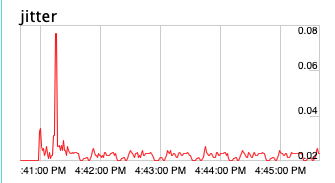
这个抖动估计值对应于RTCP Report block包的interarrival jitter字段:
1
2
3
4
5
6
7
8
9
10
11
12
13
0 1 2 3
0 1 2 3 4 5 6 7 8 9 0 1 2 3 4 5 6 7 8 9 0 1 2 3 4 5 6 7 8 9 0 1
+-+-+-+-+-+-+-+-+-+-+-+-+-+-+-+-+-+-+-+-+-+-+-+-+-+-+-+-+-+-+-+-+
| fraction lost | cumulative number of packets lost |
+-+-+-+-+-+-+-+-+-+-+-+-+-+-+-+-+-+-+-+-+-+-+-+-+-+-+-+-+-+-+-+-+
| extended highest sequence number received |
+-+-+-+-+-+-+-+-+-+-+-+-+-+-+-+-+-+-+-+-+-+-+-+-+-+-+-+-+-+-+-+-+
| interarrival jitter |
+-+-+-+-+-+-+-+-+-+-+-+-+-+-+-+-+-+-+-+-+-+-+-+-+-+-+-+-+-+-+-+-+
| last SR (LSR) |
+-+-+-+-+-+-+-+-+-+-+-+-+-+-+-+-+-+-+-+-+-+-+-+-+-+-+-+-+-+-+-+-+
| delay since last SR (DLSR) |
+=+=+=+=+=+=+=+=+=+=+=+=+=+=+=+=+=+=+=+=+=+=+=+=+=+=+=+=+=+=+=+=+
代码导读
WebRTC中统计参数jitter的估算代码位于文件/src/modules/rtp_rtcp/source/receive_statistics_impl.cc中,函数调用栈为:
StreamStatisticianImpl::UpdateCounter
该函数用于统计Rtcp report block中相关的参数,在接收端收到RTP包时被调用。
1
2
3
4
5
6
7
8
9
10
11
12
13
14
15
16
17
18
19
20
21
22
23
24
25
26
27
28
29
30
31
32
33
34
35
36
37
38
39
40
41
42
43
44
45
46
47
48
void StreamStatisticianImpl::UpdateCounters(const RtpPacketReceived& packet) {
RTC_DCHECK_EQ(ssrc_, packet.Ssrc());
int64_t now_ms = clock_->TimeInMilliseconds();
// 接受端码率统计
incoming_bitrate_.Update(packet.size(), now_ms);
// 最近一个RTP包的抵达时间
receive_counters_.last_packet_received_timestamp_ms = now_ms;
// 统计所有接收到的RTP包,包括重发包
receive_counters_.transmitted.AddPacket(packet);
--cumulative_loss_;
// 包序号解回绕
int64_t sequence_number =
seq_unwrapper_.UnwrapWithoutUpdate(packet.SequenceNumber());
// 接收到的第一个包
if (!ReceivedRtpPacket()) {
received_seq_first_ = sequence_number;
last_report_seq_max_ = sequence_number - 1;
received_seq_max_ = sequence_number - 1;
receive_counters_.first_packet_time_ms = now_ms;
// 过滤掉乱序包
} else if (UpdateOutOfOrder(packet, sequence_number, now_ms)) {
return;
}
// 正常包
// In order packet.
cumulative_loss_ += sequence_number - received_seq_max_;
received_seq_max_ = sequence_number;
// 更新当前包序号以便下一次计算
seq_unwrapper_.UpdateLast(sequence_number);
// 更新抖动需同时满足的两个条件:
// 1、新接收的包与上一次接收的包源于不同帧,因为同一帧的数据包发送的时间戳是相同的。换言之,抖动估计的最小粒度为帧而非单个数据包。
// 2、收到的正常包的个数比乱序包至少多1个以上,以确保抖动估计的参考价值,此处存疑??
// If new time stamp and more than one in-order packet received, calculate
// new jitter statistics.
if (packet.Timestamp() != last_received_timestamp_ &&
(receive_counters_.transmitted.packets -
receive_counters_.retransmitted.packets) > 1) {
// 计算抖动估计值
UpdateJitter(packet, now_ms);
}
last_received_timestamp_ = packet.Timestamp();
last_receive_time_ms_ = now_ms;
}StreamStatisticianImpl::UpdateJitter
该函数用于计算抖动估计值,且计算结果采用Q4格式表示。
1
2
3
4
5
6
7
8
9
10
11
12
13
14
15
16
17
18
19
20
21
22
23
24
25
26
27
28
29
30
31
32
33
34
35
36
void StreamStatisticianImpl::UpdateJitter(const RtpPacketReceived& packet,
int64_t receive_time_ms) {
// 接收端时延,单位为毫秒
int64_t receive_diff_ms = receive_time_ms - last_receive_time_ms_;
RTC_DCHECK_GE(receive_diff_ms, 0);
// 计算接收端时延,并将单位转换成采样时间戳单位
uint32_t receive_diff_rtp = static_cast<uint32_t>(
(receive_diff_ms * packet.payload_type_frequency()) / 1000);
// 计算发送端时延,此处未考虑时间回绕问题,我认为原因有两个:
// 1、简化计算,毕竟只是一个统计参数
// 2、出现时间回绕时,|send_diff_rtp|会是一个负数,使用uint32_t表示则会是极大值。
// 导致接下来计算的|time_diff_samples|也会是极大值,在更新时被视为突发数据而被过滤掉。
uint32_t send_diff_rtp = packet.Timestamp() - last_received_timestamp_;
// 计算接收时延与发送时延的差值,单位为采样时间戳
int32_t time_diff_samples = receive_diff_rtp - send_diff_rtp;
// 取时延差值的绝对值以方便计算
time_diff_samples = std::abs(time_diff_samples);
// 过滤因为突发数据导致的剧烈抖动,对应的时延差值为5秒
// lib_jingle sometimes deliver crazy jumps in TS for the same stream.
// If this happens, don't update jitter value. Use 5 secs video frequency
// as the threshold.
// 出于优化考虑,默认使用视频的采样率,450000=5s x 90000kbps.
if (time_diff_samples < 450000) {
// 使用Q4格式以避免浮点数计算
// Note we calculate in Q4 to avoid using float.
// 由于|jitter_q4_|采用的是Q4格式,因此需要将|time_diff_samples|转换成Q4格式再进行计算。
int32_t jitter_diff_q4 = (time_diff_samples << 4) - jitter_q4_;
// 一次指数平滑法,参考上述公式(2):
// J(i) = J(i-1) + (|D(i-1,i)| - J(i-1))/16
// = jitter_q4_ + jitter_diff_q4 / 16
// = jitter_q4_ + (jitter_diff_q4 >> 4)
jitter_q4_ += ((jitter_diff_q4 + /*四舍五入*/8) >> 4);
}
}由于抖动估算值采用的是Q4格式,且单位为采样时间戳,因此,在作为统计参数使用时需要进行如下转换:
1
2
3
4
5
// 从Q4格式还原成普通数值
uint32_t jitter = jitter_q4_ >> 4;
// 将单位从采样时间戳转换成毫秒,clock_rate_hz为音频或视频的采样率
double jitter_ms = static_cast<double>(jitter * 1000 / clock_rate_hz)
参考资料
RFC 3550 - RTP: A Transport Protocol for Real-Time Applications